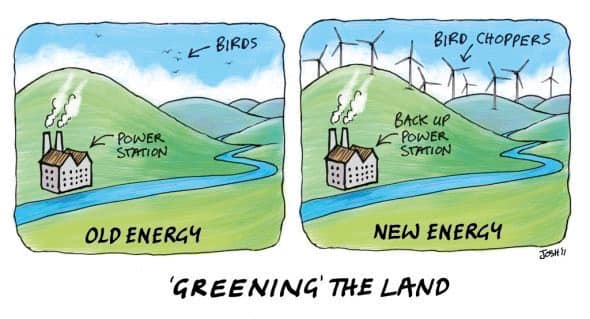
Birds of Prey
|
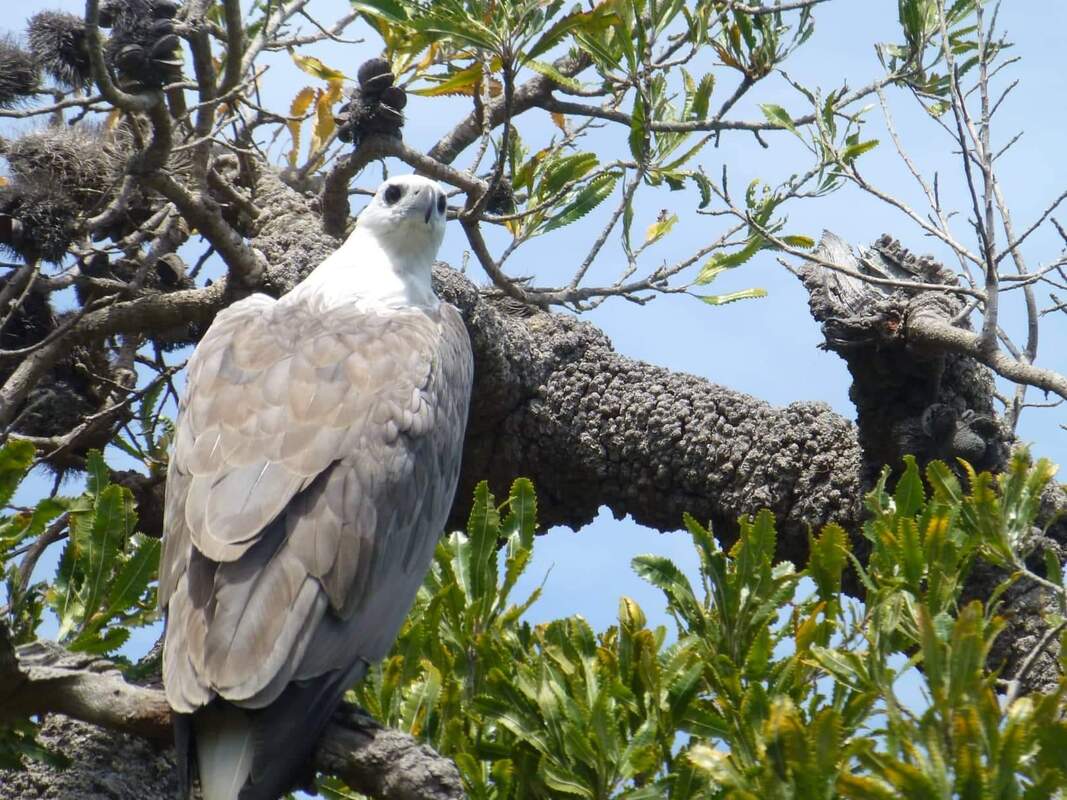
White Bellied Sea Eagle of GelliondaleThe White Bellied Sea Eagle is regularly observed in the Gelliondale area, frequenting coastal woodlands or perched on tall trees and posts in adjacent farms.
In search for prey, their habitat extends from coastal environments and waterways, as far inland as Binginwarri and Staceys Bridge. White Bellied Sea Eagles nest high in forest trees, up to 20kms inland from the coast. This photo of the White Bellied Sea Eagle was taken in bushland adjoining the proposed Gelliondale Wind farm at Hedley. |
A local farmer reports , "Often Wedged Tailed Eagles and Sea Eagles are observed feasting on the same calf carcasses in the Gelliondale area. This is a regular, monthly occurrence."
|
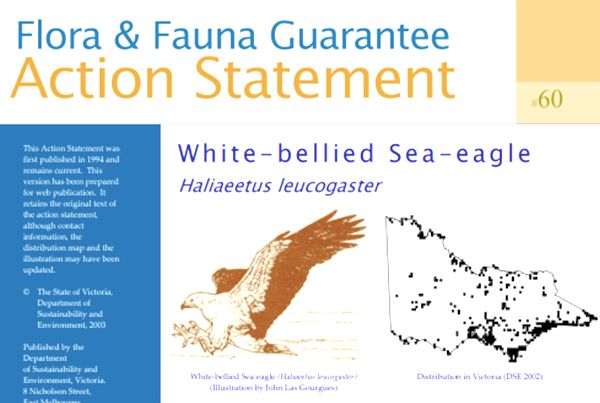
"The total Victorian population of White Bellied Sea Eagles is thought to be extremely low: possibly only 100 breeding pairs survive (R. Bilney pers. comm.). Distribution records indicate two population concentrations - approximately 25 pairs around the Gippsland Lakes and 25 pairs around Corner Inlet - and a further 50 pairs scattered throughout the rest of Victoria." Reference; www.environment.vic.gov.au/__data/assets/pdf_file/0024/32892/White-bellied_Sea-Eagle_Haliaeetus_leucogaster.pdf |
|
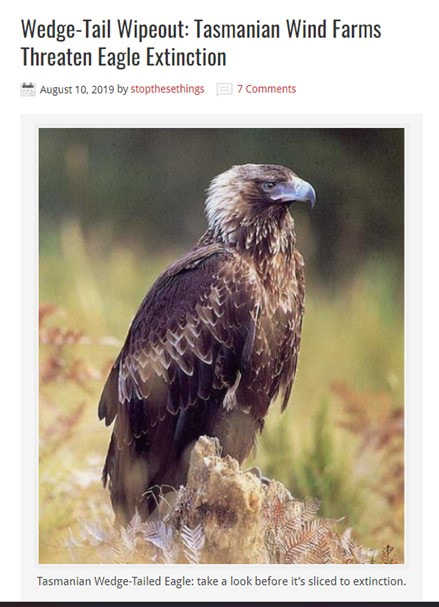
Wedge-tailed Eagle
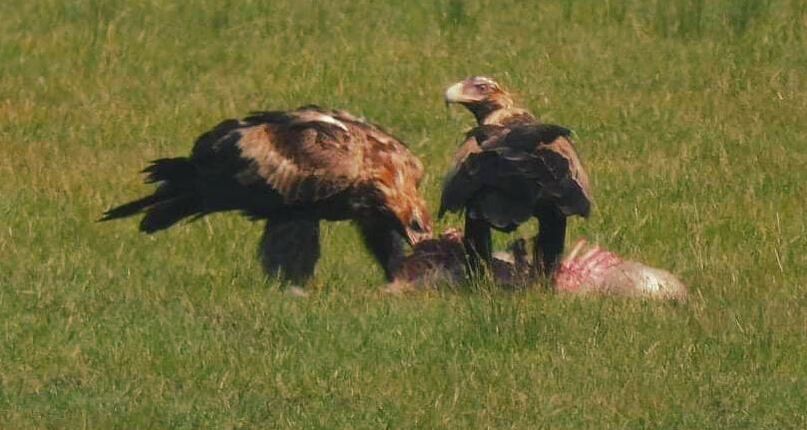
Wedged-tailed Eagles enjoying a fish meal at Hedley Victoria
Numerous Wedge-tailed Eagle breeding pairs have been recorded in the proximity of the Nooramunga Coastal Park.
As one of the world's large eagles, human activities have had a significant impact on numbers. The loss nesting sites due to forestry operations and disruptions when pairs are preparing to lay eggs may result in abandonment of the nest.
"BirdLife Tasmania says wind farms are killing endangered birds, including the Wedge-tailed Eagle, in the move towards renewable energy. Wind farms might be considered a clean form of energy but the giant turbine blades are proving a hazard to birds, including critically-endangered species, a conservation group warns."25 June 2019
"The blade is sometimes approaching 300 kilometres per hour, so the birds don't recognise that as a threat and don't change their behaviour around them," Dr Woehler
Ref:https://www.sbs.com.au/news/article/wind-turbines-killing-endangered-birds/js55575tr
|
Windfarms killing
|
“It’s very, very, very scary — wind farms are just bird mincers, eagle killers,” said Craig Webb, who runs a raptor refuge at Kettering, in southern Tasmania. “We have to do something to get on top of this.
|
|
|
Birds of prey observed in the Gelliondale and in proximity of Wilsons Promontory National Park General Location include,
Osprey
Black Shouldered Kite
Wedge Tailed Eagle
Swamp Harrier
Gray Goshawk
Brown Goshawk
Collard Sparrowhawk
Whistling Kite
Brown Falcon
Peregrine Falcon
White Bellied Sea Eagle
Reference ; ebird.org/australia/hotspot/L928172/media?m=&yr=all